

Environmental Sustainability
The RGS Green Strategic Plan maps out a holistic and whole-of-school effort to support Singapore’s national agenda on sustainable development. It aims to make environmental sustainability a key theme through the 4Cs: Campus; Curriculum; Culture and Community (e.g. partnerships beyond school.)
Learning Through Biophilia at RGS
The RGS campus lies within 1 km of the Central Catchment Nature Reserve, one of Singapore’s most significant remnants of native rainforest. This close connection to nature provides a valuable opportunity for the school to support local biodiversity, national conservation plans and the global climate crisis through deepened environmental learning.
The RGS Biophilic Master Plan can be put into practice here and it demonstrates our commitment to drive environmental sustainability in the school
The master plan, Learning Through Biophilia – Bringing Nature into the School Campus, aims to transform RGS into a biodiverse and ecologically sustainable learning environment. It positions the campus as a living laboratory where students can observe ecological processes, participate in citizen science, and develop a stronger understanding of their relationship with the natural world.
Rewilding at Our Wild Garden
Our Wild Garden is the first of several rewilded landscapes planned across the RGS campus. Rather than creating a fixed or highly manicured garden, the design works with natural processes and allows the landscape to change over time.
The layout responds to the site’s existing topography and is anchored by the Rain Tree. Prior to this intervention, the majority of the garden stayed flooded after it rained each time. The topography was altered: the edges of the garden were raised while the middle remained low, especially around the Rain Tree. This directs rainwater to collect only in the middle of the garden, in natural depression called a swale. Plants that tolerate more damp conditions are planted here.
The garden brings together plants that represent a mosaic of habitats inspired by Singapore’s natural landscapes, for example:
-
Grasslands with low groundcover, tall grasses and wildflowers in sunnier areas
-
Tropical scrublands featuring ferns, gingers and orchids
-
A seasonal freshwater swamp under the existing Rain Tree
-
An urban regenerated forest
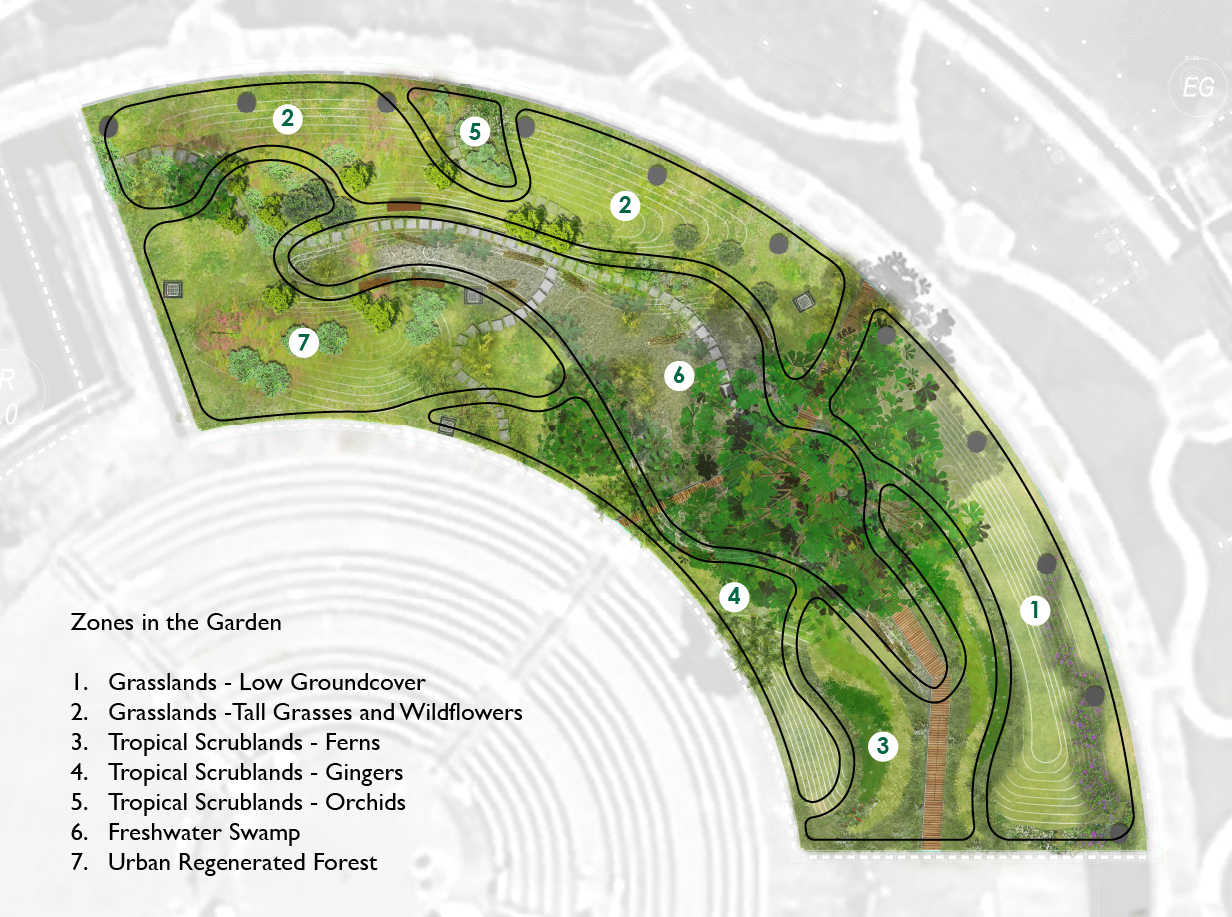
Our Wild Garden with zones inspired by Singapore's natural habitat types
These habitats provide different conditions for plants and wildlife. As vegetation establishes, soils recover and the canopy develops, the garden will continue to evolve. Seeds and wildlife may move between the campus and the nearby nature reserve, helping the school grounds function as an ecological stepping stone through the wider landscape.
A Living Landscape
Rewilding means giving natural processes more space to shape, renews the landscape and and creates wildlife corridors. Maintenance is reduced selectively, while targeted care is still used to support ecological health, safety and access.
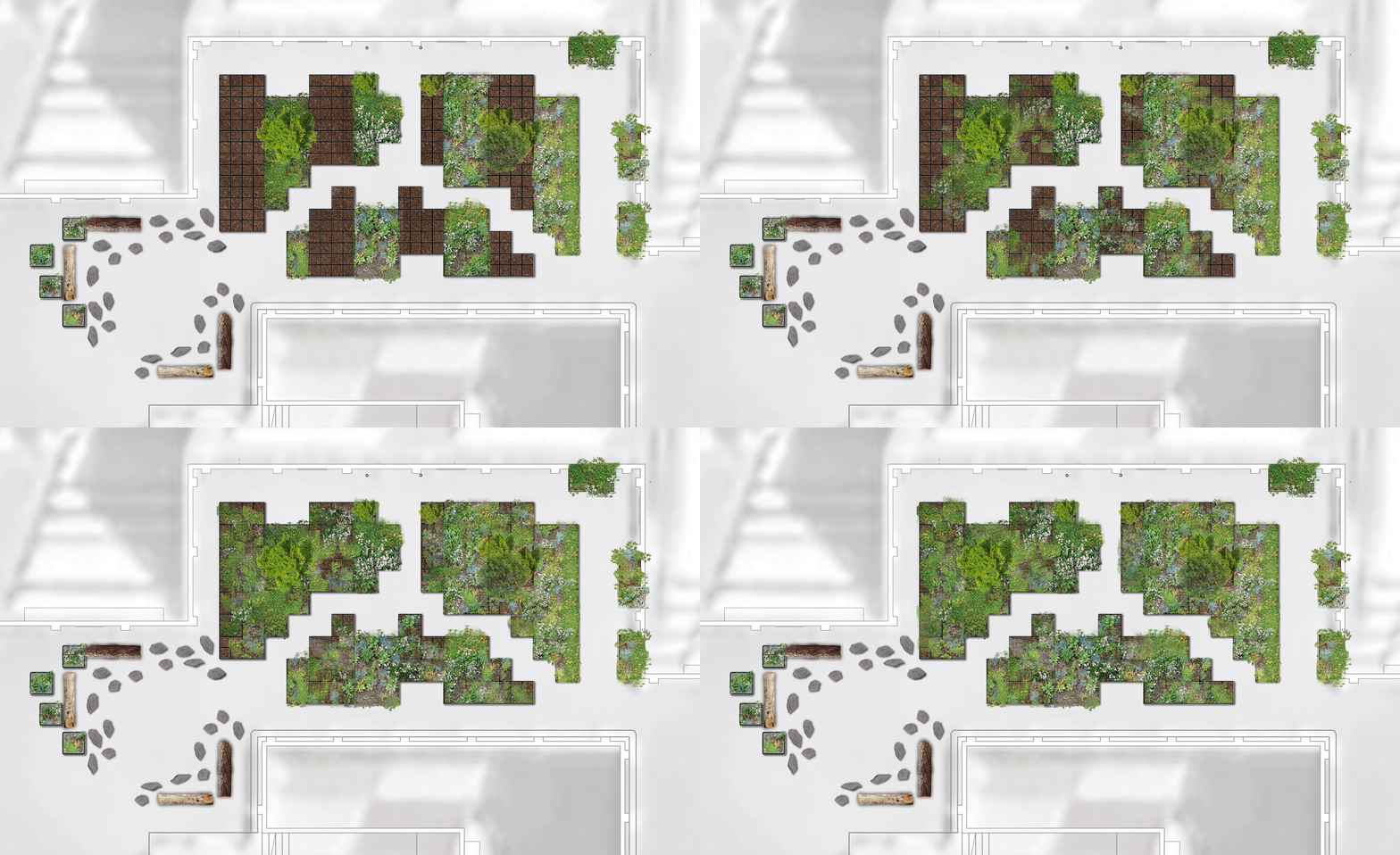
Change is therefore an essential part of the garden. Some plants may germinate, flower and complete their life cycle within months, while trees and other long-lived species gradually establish. Areas that are sunny today may become shaded in the future, allowing different plant communities to develop. What visitors see during one visit may not be the same on the next, and this changing character is part of the garden’s life.
Paths guide visitors through the different habitat zones, while changes in elevation, planting structure, texture and moisture create varied experiences for people and opportunities for wildlife.
What Is Biophilic Design?
Biophilic design brings nature into human environments to support health, learning and well-being. At RGS, this includes opportunities to experience natural light, vegetation, water, organic forms, changing seasons and the sounds and movement of wildlife.
The rewilded garden extends these principles beyond the building. It combines the human-centred benefits of biophilic design with an ecosystem-centred approach to rewilding—creating a campus that supports both people and urban biodiversity. In addition, it will create an immersive nature-based learning environment that can seamlessly integrate educational, ecological and aesthetic considerations.
As the campus matures, students and visitors are invited to pause, observe and return regularly. Look closely at how the habitats change, listen for birds and insects, and notice how plants respond to light, rain and shade. Through these everyday encounters, the RGS campus becomes not only a place to learn about nature, but a place to learn through nature.